female nursing student

What Job Should I Have While in Nursing School

Attending nursing school while working full or part time, on top of potentially caring for your family, isn’t easy, but it can be done with thoughtful time management and realistic goals. You can reduce the stress of working while in school by choosing a job that isn’t as demanding as nursing school, that’s amenable to your schedule and, ideally, is relevant to your nursing program.   CNAs assist nurses in routine patient care, helping bathe and feed patients and monitor their vital signs. This job has fewer duties (and thus less pressure) than a full-time nurse while also giving students hands-on exposure, helping them develop essential skills they can utilize in school and their careers.   PCTs are similar to CNAs, but the position can be more demanding, having more responsibilities such as performing EKGs and basic medical procedures. As a PCT, students can gain valuable exposure and experience. However, these positions may offer far less scheduling flexibility compared to a CNA.   Enrolling in an EMT course before nursing school can allow students to work as an EMT during their program, which has the benefit of a personalized schedule and the opportunity to gain crucial healthcare skills such as working in emergency situations, quickly diagnosing patients and administering treatment under pressure. However, this job can be immensely stressful, which can be detrimental if your nursing program is already difficult.   , providing a dual-purpose stepping stone.   Medical scribes document patient visits in real time for patient assessment, helping nurses and doctors focus on interacting with patients without worrying about taking notes for future reference. This position will give students deeper insights into medical terminology and the daily workflow of a clinic, making it useful to those studying to become nurses and administrators alike.   HHAs provide care to patients at their homes, assisting with their daily routines and medication regimens. These positions can give students access to flexible shift-oriented schedules and a comparatively low-pressure work environment, as well as experience in patient care and forming relationships.   will find this job especially useful, as they’ll gain insight and experience into how hospitals operate.   Nursing school represents a significant investment of time and resources for students, and working while in a program may be a necessity. Between rigorous coursework, exams, hands-on training and lab work, it can be challenging to fit a job into your education.   Staying organized, planning ahead and having understanding employers can help make the juggling act easier to balance. The stress of school and work can also take a toll on your mental health – exercising, sleeping regularly and taking some time to relax whenever possible will help protect you from burnout .   Choosing the right program can also make working while in school easier – especially for degree paths that can be . Certain programs can require rigid, in-person coursework that can make earning money on the side nearly impossible.   St. Louis College of Health Careers’ programs have start dates throughout the year and are designed to be accommodating to students’ needs without compromising academic quality. Our staff understands the struggles students face and strives to be accommodating. Some programs are fully online, so working professionals looking to advance their careers can take courses on their own schedule while still enjoying a reputable and accredited medical education.   Receive a comprehensive yet flexible medical education that will thoroughly prepare you for a fulfilling career in nursing at St. Louis College of Health Careers. Our nursing programs offer a compelling combination of in-depth coursework and ample real-world experience so you gain the knowledge you need to tackle your certification exams and be ready to enter your chosen career with confidence.   Reach our admissions team at 866-529-2070 to learn more about and start your application today.

nursing students studying together

First Year of Nursing Classes

Entering your first year of college is equal parts exciting and intimidating. It’s not uncommon to be nervous about the transition regardless of how prepared you might be. In the days leading up to the beginning of your first semester, do your best to relax and brush up on helpful tips and tricks for succeeding in your first year of classes. Change can be overwhelming — add an academic workload to the mix and it can start to feel unmanageable. The best thing you can do when you first start college is to pace yourself. Don’t try to take on too much all at once. Give yourself time to adapt to your class schedule, the curriculum and assignments. You don’t need to be excellent at everything right away. Allow yourself the room to make mistakes and learn from them — that’s what college is all about. Meeting academic deadlines is crucial to your success. A lot of important dates will begin to pile up all at once and it can be easy to unintentionally miss due dates or forget to complete assignments. Managing a calendar is an absolute must when starting college. Using an online app or a physical planner can help you keep track of important dates. Everyone learns and absorbs information differently (A.K.A. learning styles), which means there are many ways to participate in class or study for an exam. Even if you think you know your learning style, don’t be afraid to explore new study techniques (i.e., flashcards, drawing, reading aloud, seeing a tutor or tutoring another student). You might even discover that you have more than one learning style — which is common for some students. It’s important to understand how to take advantage of each learning style and find ways to improve your study methods. While college could appear cutthroat, your classmates really aren’t your competition. Instead, they are your colleagues who are pursuing their education alongside you. Be open to chatting with the person sitting next to you or schedule time to meet with your peers outside of the classroom. It can be helpful to form study groups before a big exam or ask a classmate for feedback on a paper. The more you allow others into your learning journey, the better you’ll feel about the process. Extracurricular activities are also a great way to get involved on campus because they can introduce you to new and valuable perspectives and experiences. Most students who participate in sports or clubs or attend optional lectures or presentations find their relationships with their peers and professors are better for it. You are in school to learn material you have no prior knowledge of. Naturally, you will likely have questions for your professors or instructors in the middle of a lecture or lab. Your instructors expect you to have questions, so it will come as no shock to them when you don’t understand something. Don’t be intimidated by a classroom or fellow students and always ask your questions. Someone else likely has the same question but are too intimidated to speak up, or you may prompt the instructor to provide elaboration or clarification that will benefit the entire class. If you don’t feel comfortable asking questions in a classroom, you can reach out to your professor via email or schedule a meeting during their office hours. Aside from the goal to graduate college with a diploma, you should also think about short-term and long-term goals over the course of your academic career. Whether that’s making all As and graduating with honors or pushing yourself to enroll in a challenging course, your goals are often important steppingstones toward your career. College is what you make of it, so work hard, be brave and go for it. St. Louis College of Health Careers is committed to providing students with an understanding of our rapidly evolving healthcare landscape. Graduates leave our programs with a and can swiftly apply their skills in the field. We offer numerous associate, bachelor, master and diploma programs that qualify to take certification exams and enter health careers ranging from practical nursing to healthcare administration. Learn more about our by calling 866-529-2070.

nursing students using a simulation lab

What Is a Simulation Lab and How Does It Enhance Learning Experiences

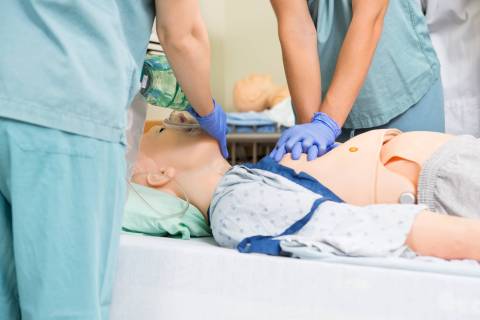
Becoming a nurse requires a lot of hands-on training. Nursing students need to be prepared to deliver quality care to real-life patients once they enter the workforce. To do so, they must have the opportunity to practice what they learn, make mistakes and learn from them in a safe and supportive academic environment. To ensure nursing students gain as much practical knowledge and exposure to clinical situations as possible, many nursing schools provide their students with realistic clinical settings in the form of simulation labs. These simulation labs, also known as simulation centers, include realistic looking labs, simulation mannequins and medical equipment and technology, such as IV pumps, defibrillators and electronic health records. The labs are designed to resemble typical hospital settings, like emergency rooms, intensive care units, operating rooms and labor and delivery rooms. The experiential learning that happens in simulation labs prepares students for real-life nursing careers without exposing actual patients to the potentially harmful mistakes of students.   Participating in a nursing simulation lab requires much more than just showing up and taking part in a medical scenario. A typical simulation lab consists of three steps: .   Preparation is key to a successful simulation lab experience. Before attending lab practice, your instructor will likely give you a list of example patients with various medical conditions. These conditions may include things like respiratory distress, low blood sugar, cardiac arrest and opioid overdose. It’s the student’s responsibility to attend the simulation lab prepared. This means you’ll need to research each simulation patient’s condition and complete any assigned readings and tasks before the active participation step. Showing up unprepared will significantly diminish your learning experience and may negatively affect your academic performance.   This part requires your active participation in a simulation lab scenario. You’ll be asked to care for a “patient” showing symptoms of one or more of the conditions you were assigned by your instructor. You may be asked to work alone or with fellow students. The idea behind the simulation is to get you to think and act quickly and become accustomed to working in a high-pressure medical environment. Your instructor, who will be watching you from another location, can control what the “patient” says or how they respond to your questions, so you can never really know what to expect or how the scenario will play out. This allows your instructor to evaluate your nursing skills in real time and give you plenty of useful feedback afterward.   A simulation lab cannot be successful without a thorough debriefing session. Here, you’ll get to review the simulation performance of you and your classmates with your instructor and peers. You’ll have the opportunity to reflect on your decisions and actions, evaluate what went well and identify areas for improvement.   As a future nurse, participating in simulation labs is an invaluable learning experience. Research shows ing outcomes when there’s an abundance of practice involved, which a clinical simulation lab provides. SLCHC’s state-of-the-art provide nursing students an abundance of experiential learning to help them excel in their future medical careers. Our students get to polish their skills in a safe and academically nurturing environment alongside dedicated faculty and fellow students. To learn more about our or visit our St. Louis or Fenton campuses.