

traveling nurse with map

Using Your Degree to Become a Traveling Nurse

While a career in nursing can be rewarding both professionally and personally. It’s not uncommon for nurses to work several years in the same hospital or outpatient facility. People who thrive in consistent environments with clearly defined expectations may excel in those positions. However, others may find greater satisfaction from frequently changing their work environment or experiencing new challenges. If you’re someone with an adventurous spirit who loves to care for people, why not consider becoming a travelling nurse? Travel nurses fill a vital niche in the medical field. The heroic assistance they provided to understaffed facilities overwhelmed by COVID-19 cases was a recent example of just how valuable these healthcare professionals can be for patients.   Generally, a travelling nurse provides medical care to patients on various short-term assignments, which are offered to them by special staffing agencies. These assignments require moving to various locations and working in different hospitals and healthcare facilities. Each assignment typically lasts between eight and 26 weeks. Travel nurses play a critical role in filling in for permanent nurses whose life circumstances are preventing them from working. These circumstances include things like maternity leave, short or long-term disability and familial obligations. Travelling nurses may also play a key role in filling certain specialized nursing positions, especially when hiring the right permanent nurse requires a lot of time and effort.     There is no perfect job, and just like many other professions, travel nursing has its pros and cons. Of course, what one person considers a disadvantage may be a significant benefit to someone else. Deciding to work as a travel nurse should be a personal choice based on your unique needs and preferences. If you want the opportunity to explore different parts of the country, and sometimes even different parts of the world, a career in travel nursing may be right for you. You may also find it interesting to meet people from diverse backgrounds and learn new skills and practices from other healthcare professionals. One of the undisputed benefits of travel nursing is a potentially higher pay than the average nursing salary. It’s not uncommon for travel nurses to earn over a year, depending on their degree and experience. If you’re looking to save up a substantial amount of money and don’t mind living with family or friends in between your assignments, travel nursing may help you quickly achieve your financial goals. The most common disadvantages of travel nursing include being almost constantly away from family and friends, which may be especially problematic if you have children. Although many travel nurse agencies do provide benefits like health insurance and travel reimbursement, they may not be as comprehensive or flexible as the benefits offered by some permanent positions. Travel nurses may also need multiple state licenses to be eligible for certain assignments.   To become eligible for travel nursing you’ll need to earn your nursing degree and gain valuable work experience. Travel nurses must be registered nurses (RNs). To become one, you’ll have to earn either an associate degree or a bachelor’s degree in nursing. You’ll also need to pass the National Council Licensure Examination for registered nurses and apply for RN licensure in your state. Some agencies or healthcare facilities may want travel nursing candidates to have at least two years of hands-on experience through a stationary, full-time position, such as working in a hospital, nursing home or outpatient clinic.   If nursing sounds like an interesting career but you’re not ready to commit to years of coursework, consider earning a from St. Louis College of Health Careers. Our academically rigorous, hands-on program will prepare you for a rewarding entry-level nursing career and help you decide if becoming a registered nurse is something you aspire to do. For more information about our diverse catalog of .
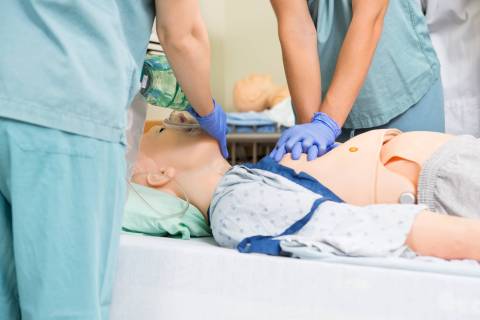
nursing students using a simulation lab

What Is a Simulation Lab and How Does It Enhance Learning Experiences

Becoming a nurse requires a lot of hands-on training. Nursing students need to be prepared to deliver quality care to real-life patients once they enter the workforce. To do so, they must have the opportunity to practice what they learn, make mistakes and learn from them in a safe and supportive academic environment. To ensure nursing students gain as much practical knowledge and exposure to clinical situations as possible, many nursing schools provide their students with realistic clinical settings in the form of simulation labs. These simulation labs, also known as simulation centers, include realistic looking labs, simulation mannequins and medical equipment and technology, such as IV pumps, defibrillators and electronic health records. The labs are designed to resemble typical hospital settings, like emergency rooms, intensive care units, operating rooms and labor and delivery rooms. The experiential learning that happens in simulation labs prepares students for real-life nursing careers without exposing actual patients to the potentially harmful mistakes of students.   Participating in a nursing simulation lab requires much more than just showing up and taking part in a medical scenario. A typical simulation lab consists of three steps: .   Preparation is key to a successful simulation lab experience. Before attending lab practice, your instructor will likely give you a list of example patients with various medical conditions. These conditions may include things like respiratory distress, low blood sugar, cardiac arrest and opioid overdose. It’s the student’s responsibility to attend the simulation lab prepared. This means you’ll need to research each simulation patient’s condition and complete any assigned readings and tasks before the active participation step. Showing up unprepared will significantly diminish your learning experience and may negatively affect your academic performance.   This part requires your active participation in a simulation lab scenario. You’ll be asked to care for a “patient” showing symptoms of one or more of the conditions you were assigned by your instructor. You may be asked to work alone or with fellow students. The idea behind the simulation is to get you to think and act quickly and become accustomed to working in a high-pressure medical environment. Your instructor, who will be watching you from another location, can control what the “patient” says or how they respond to your questions, so you can never really know what to expect or how the scenario will play out. This allows your instructor to evaluate your nursing skills in real time and give you plenty of useful feedback afterward.   A simulation lab cannot be successful without a thorough debriefing session. Here, you’ll get to review the simulation performance of you and your classmates with your instructor and peers. You’ll have the opportunity to reflect on your decisions and actions, evaluate what went well and identify areas for improvement.   As a future nurse, participating in simulation labs is an invaluable learning experience. Research shows ing outcomes when there’s an abundance of practice involved, which a clinical simulation lab provides. SLCHC’s state-of-the-art provide nursing students an abundance of experiential learning to help them excel in their future medical careers. Our students get to polish their skills in a safe and academically nurturing environment alongside dedicated faculty and fellow students. To learn more about our or visit our St. Louis or Fenton campuses.

doctor hands holding white sign with HIPAA on it

What Is HIPAA and How Does it Impact Electronic Health Records

HIPAA stands for the Health Insurance Portability and Accountability Act. Enacted in 1996, HIPAA is a federal law that protects the privacy and security of patient health information. This means whether your health information is stored in a paper record or an electronic record, it must be kept private and secure. Nowadays, most healthcare providers have ditched traditional paper records in favor of electronic health records (EHR). While there are several benefits to storing information electronically, there’s also plenty of room for breaches in security and privacy. To ensure HIPAA compliance, healthcare organizations must implement a variety of security methods to protect their patients’ health information, including passwords, PIN numbers, encryptions and logon and change audit reports.   Thanks to the introduction of electronic health records, healthcare professionals can easily store, update and share information about a patient’s health. The information can be accessed by doctors, nurses, lab technicians and pharmacists in real time, which makes it easier for patients to receive fast and accurate care. All this data is considered .   Organizations breaking HIPAA policies can suffer devastating consequences, such as hefty financial penalties of up to if the violation resulted from willful neglect.   While there’s plenty of room for HIPAA violations to occur, healthcare organizations and businesses can take several steps to enforce safe handling policies for confidential patient information. Businesses should strive to create comprehensive privacy policies and ensure each employee, regardless of their everyday responsibilities, receives proper HIPAA compliance training. Special attention should be given to administrative employees, such as medical billers and coders who manage patient electronic health records. These trainings should be delivered in a simple and straightforward manner, without overwhelming employees with legal jargon or unnecessary information.   Are you interested in being part of the ever-evolving healthcare administration field? A career in medical billing may be the right choice for you. As a medical biller, you’ll be responsible for effectively managing a variety of medical records. Medical billers are needed in all kinds of healthcare organizations, including hospitals, private practices and nursing facilities. Take the first step in your healthcare career by exploring SLCHS’s program. Our academically challenging coursework will give you a solid foundation and professional confidence to set your healthcare career in motion. To learn more about our programs, call 866-529-2070 or on our website.