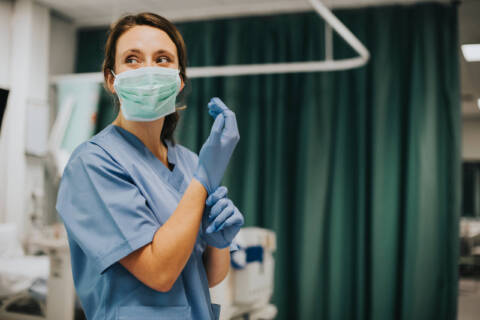
Nursing Provides Leadership Skills Needed in the Healthcare Field
.



Every job and every field depends on teamwork at least to some extent – but for nursing, it’s a matter of substantial and grave importance. It isn’t just about fostering a good workplace environment (though that’s important). If medical professionals don’t work together successfully, sick people don’t get better – it’s as simple as that. Positive patient outcomes are dependent on the strength of teamwork within a single unit as well as through interdisciplinary collaboration. Treatments may not be effective if medical professionals don’t work together to carry them out. Moreover, studies have shown that good teamwork is a significant factor in . Although collaboration isn’t just about cultivating a positive workplace environment, that is a critical piece of the puzzle. With the number of nurses having dramatically dropped after COVID-19, increasing retention and reducing turnover are of crucial importance to the field – and ineffective teamwork due to negative relationships with colleagues threatens that. Many nursing programs provide ample opportunities for students to work together so they can learn how to collaborate effectively with others to enhance patient outcomes and contribute to a better work environment after graduation. That said, there’s only so much you can learn outside of hands-on training and trial-by-fire experience. The quickest way to learn teamwork and its importance is on the job, which is why reputable programs will balance real-life training with education. Almost every hour of every day nurses require teamwork. Whether you’re communicating with the doctor regarding a patient’s information or treatment progress, problem-solving across disciplines with other professionals, splitting responsibilities between your team depending on needs or training new nurses, communication is vital. Soft skills like active communication, listening, negotiating and staying calm in high-pressure situations will be valued just as highly as your technical skills on the job. Having specialized expertise in IV therapy and wound care will be enhanced if you also have exceptional bedside manner and teamwork capabilities. Developing both will make you an esteemed team member and an attractive asset to employers looking to enhance their workplace’s culture with good people who are also good nurses. St. Louis College of Health Careers offers rigorous training for aspiring nurses and current nurses looking to advance their careers with an esteemed education that medical professionals and administrators recognize. Our nursing programs are designed to both challenge students and prepare them to hit the ground running after graduation and to also be flexible to their needs as real people. Learn more about and start your application today by calling 866-529-2070.

Yes. Any job in medicine requires constant and continuous learning to ensure you’re providing the most up-to-date and efficient care – but some training, specifically courses that develop critical skills, can lead to more tangible results, like a pay increase or diversified employment opportunities. If you’re looking to make more money or secure a higher salary, enhancing these skills – which include both technical and interpersonal proficiencies – can help you achieve those goals. Taking on extra shifts in high-demand areas can come with extra pay, including in high-demand environments like the ICU and ER. However, an increased paycheck for more hours worked isn’t the same as getting hired in a higher-paying position where you can work the same number of hours and get paid more. Training, whether through certifications or by going back to school for an advanced degree, is one of the most reliable ways to enhance your resume and establish your commitment to earning leadership roles or positions with more responsibility. Certifications are less expensive and time-consuming than an advanced degree. Some may only require completing a certificate program and/or a specific amount of work experience before nurses are eligible to sit for certification exams to prove their skill proficiency. Common certifications for RNs include Certified Critical-Care Nurse (CCRN), Inpatient Obstetric Nurse (RNC-OB) and Clinical Research Nurse Certification (CRN-BC), while certifications for LPNs primarily focus on verifying entry-level basics, such as IV care and pharmacology. In contrast, a degree usually involves many semesters of dedicated study and training, but that effort can go a long way in elevating your salary potential. Advanced degrees, such as , can provide current nurses a convenient opportunity to hone existing skills, gain new ones and translate them directly into a broader array of career opportunities. Getting an advanced degree not only gives you the rigorous education you need to develop specialized skills, but it can also serve as concrete proof of your capabilities to employers and healthcare facilities. While you may improve your nursing abilities in your current position, employers may not be as confident about hiring you without formalized education and certifications. Although diploma programs are faster, an advanced degree can show your dedication to a specific area, clearly demonstrating how much time and effort you’ve put into learning these skills, which can give you a competitive edge over other applicants. A degree shows that you’ve undergone a thorough education in the subject and have officially cultivated your skills with a combination of expert guidance and hands-on training. Pursuing a formal education can also give you access to a network of professionals and mentors, opening the door to new connections and influences that can lead to new career prospects previously inaccessible. Make yourself a desirable job candidate with the potential to earn more money with a reputable and rigorous education from St. Louis College of Health Careers. Our programs will thoroughly prepare you for your dream job while being flexible to your current job responsibilities, including online classes so you can advance your career on your own time. Call 866-529-2070 today to learn more about .

One nurse’s definition of a successful career may be pursuing an LPN to RN degree and finding a job where they are able to coordinate patient care, while another’s may be to be directly involved in the care of geriatric or pediatric patients. However you define “success”, the advanced programs at St. Louis College of Health Careers will give you the tools and resources you need to excel in your path and reach your dream with confidence. Your resume is only the start to a successful career, and while the end goal is different for everyone, there are some common tools everyone can use, such as pursuing more advanced degrees and developing your skills. Find a job that caters to what you’re passionate about – whether that’s patient care, education or administration – and, if possible, has a good work-life balance so you can maintain that passion for many years without becoming burnt out. Honing your expertise and skillset within your specialization will make you a valuable teammate and employee – both of which can lead to a successful career. Currently, nurses make up a significant majority of the healthcare workforce with over three million employed, but only approximately have a master’s degree. You can gain a competitive edge over other nurses applying for leadership roles and higher-paying positions by getting an advanced degree. Seek out opportunities that give you more experience, like leadership roles, that make you a more likely candidate for further advancement. Successful nurses also keep up with technology and patient-care advancements in their field. Even if you don’t go back to school, seeking new and challenging continuing education courses can ensure your technical skills, medical knowledge and passion for the work remain fresh. Forgetting to take care of your own mental health can quickly lead to burnout, which has the potential to derail your career. Taking care of yourself – eating a healthy diet, getting a good night’s rest whenever you can and exercising as regularly as possible — can be crucial in alleviating stress, enabling you to care for others better and with ease. The faculty at St. Louis College of Health Careers will prepare you to excel in your chosen field, training aspiring LPNs, RNs and healthcare administrators to excel from the very first day. Call 866-529-2070 to learn more about and apply today.

saw a substantial number of bedside nurses leave the profession, seeking another nursing position that wasn’t as taxing. The dedication and energy required to perform the duties of a bedside nurse are transferable and valued everywhere. However, if you are trying to jump to a higher-paying position or a separate specialization, getting an advanced degree can make their transition smoother. Dealing with arguably the most draining part of healthcare on a constant basis while suppressing your own emotional reaction in order to calm patients is one of the biggest stressors of the position. Bedside nurses work irregular hours that can stretch into the night and well into the next day. These positions may require nurses to work weekends and holidays – all while spending long hours on their feet running all over the place. This can not only lead to an unhealthy work-life balance, but this schedule can also lead to bodily wear and tear and raise nurses’ risk of developing injuries from repetitive strain. Healthcare professionals are among the most vulnerable to workplace violence, with patient aggression in hospitals and nursing homes negatively affecting bedside nurses. This is made worse by the unsafe nurse-to-patient ratios, which can create potentially dangerous working conditions that can overwhelm bedside nurses. Between the high patient loads, caring for critically ill patients, talking to concerned family members and critical understaffing, many nurses experience burnout. This can all be compounded if your team is overwhelmed and unable to work efficiently together , which is a substantial factor in nurse turnover. Not all reasons are necessarily due to a distaste for bedside nursing – some may be seeking an opportunity to pursue a higher-paying job or a position in a different specialization, such as education, healthcare administration, clinical research or critical care. The most effective way to change course is to pursue an advanced degree. While certifications can give nurses quick accreditation in areas they may want to pursue, going back to school can show employers your dedication to cultivating your skillset, which can subsequently increase your chances of getting hired as well as increase your earning potential. Completing an advanced degree in can provide tangible evidence of your in-depth knowledge and refined skillset, giving you (and your employers) confidence that you can perform well in a higher position and will be able to hit the ground running from the moment you’re hired. At St. Louis College of Health Careers, we prepare aspiring and transitioning nurses for their dream position with one-on-one guidance delivered by experienced faculty, hands-on training and ample clinical experience. Strengthen your abilities at your own pace with in-person and online programs that are flexible to your work and life schedule. Learn more about our programs and today by calling 866-529-2070.
Nursing licensure is a critical aspect of a nurse’s professional journey, representing a formal recognition of their qualifications and competence to practice nursing in a specific jurisdiction. It is a legal requirement in most states to ensure that nurses meet established standards of education, training and ethical conduct to provide safe and effective patient care. A nursing license grants individuals the legal authority to practice nursing within a defined scope of practice. It signifies that the nurse has met the minimum requirements set forth by the licensing authority. To qualify to sit for the formal licensing exam, test takers must have completed . They only gain certification after passing a standardized licensure examination (such as the NCLEX-RN in the United States) and meeting any additional state requirements for employment as a nurse. Obtaining and maintaining a nursing license is a multifaceted process that requires dedication, diligence and ongoing commitment to professional development. While the specific requirements may vary by jurisdiction, the overarching goal is to ensure that nurses possess the knowledge, skills and ethical standards necessary to provide safe and effective patient care. In addition to meeting initial licensure requirements, nurses must also fulfill ongoing obligations to maintain their licensure status. This often involves completing continuing education credits, renewing the license at regular intervals and adhering to the nursing code of ethics. By staying abreast of changes in healthcare regulations and best practices, nurses can uphold the highest standards of care and demonstrate their ongoing competency as healthcare professionals. Graduating from an accredited nursing program is the foundational first step on the path to obtaining a nursing license. These programs, offered by colleges, universities and vocational schools , provide aspiring nurses with the essential knowledge, skills and clinical training needed to excel in the field. Nursing programs must meet rigorous standards set by accrediting bodies to ensure they are providing the skills and modern clinical experience that healthcare employers are looking for in new nurses. Education at an accredited institution indicates graduates are well-prepared to enter the workforce and provide safe, competent patient care. One of the most critical requirements for obtaining a nursing license is passing a licensure examination, such as the NCLEX-RN (National Council Licensure Examination for Registered Nurses) or NCLEX-PN (for Practical Nurses). These examinations assess the candidate’s understanding of nursing theory, clinical skills and ability to apply critical thinking in various patient care scenarios. Passing the licensure exam demonstrates that the nurse possesses the necessary knowledge and competence to practice safely within their scope of practice. Many jurisdictions require nursing license applicants undergo a criminal background check as part of the licensure process. This check helps ensure the safety of patients by identifying any past criminal convictions or disciplinary actions that may raise concerns about the applicant’s suitability for licensure. Depending on the jurisdiction, certain criminal offenses may disqualify an individual from obtaining a nursing license, while others may require further review. Nursing license applicants may need to comply with additional state requirements specific to the area where they’re applying for nursing positions. You should look up the requirements with the division of professional registration for the state in which you’re seeking employment, such as the Missouri Division of Profession Registration. The defines the specific requirements for licensure requirements in the state. When considering different vocational schools that offer nursing diplomas or degree programs, it’s important to confirm accreditations prior to enrollment. Only the successful completion of a program offered by an accredited institution will allow you to sit for the relevant NCLEX exam. With our dedicated faculty and comprehensive curriculum, you’ll gain the knowledge and skills needed to excel in the dynamic field of healthcare. here on our website or get more information by calling us at 866-529-2070.

In recent years, the concept of population health has become more important in the healthcare industry. It represents a shift in focus from treating individual patients to improving the health outcomes of entire communities or populations. At the heart of this approach are healthcare professionals who play a crucial role in promoting wellness, preventing disease and improving health outcomes within a community, geographic area or socioeconomic group. There’s typically an increased emphasis on compiling accurate data on health indicators to identify health trends and disparities within populations to allocate resources more effectively. Nurses can potentially play a role in the development and implementation of population health efforts. In some circumstances, front-line nurses are uniquely positioned to make significant contributions to population health initiatives. Population health involves efforts to improve the health outcomes of groups of individuals, including communities, cities or even entire nations. It involves addressing the social, economic and environmental factors that influence health, in addition to ensuring clinical care is distributed and tailored to maximize positive impact, especially where shortcomings exist. Rather than focusing solely on the treatment of individual patients, population health initiatives aim to prevent illness, promote healthy behaviors and address the root causes of health disparities within populations. Nurses who have If you’re ready to make a difference in the health of communities, you may want to learn more about the offered by St. Louis College of Health Careers. Our comprehensive program prepares nurses to excel in diverse healthcare settings, equipping them with the skills and knowledge needed to positively impact individual patient outcomes as well as contribute positively to population health. today at 866-529-2070 to learn more about our RN to BSN program and the types of career paths it may qualify you to pursue.

Put simply, no. While there are concerns that nurses are . Hospitals saw a dramatic staffing shortage during the pandemic that they’ve yet to fully recover from. The overwhelming hours brought on by the pandemic, compounded by a high case workload and exacerbated anxiety, took a toll on nurses, resulting in some nurses retiring early or pursuing different career paths. COVID-19 was a strenuous time for nurses that led to added stress in an already high-pressure job. Nurses faced increased risks of exposure to COVID-19 while caring for an unprecedented influx of patients. The demand on their time and increasing workload made it difficult for some nurses to get back home long enough to recover for their next shift. Although nurses were on the front line and became familiar with some aspects of COVID-19 earlier than the average person who wasn’t in the medical field, there were still many facets of the condition they learned about along with their patients. Anxiety about exposure in the early months was particularly bad for nurses. On the front line of the pandemic, many were concerned about their personal safety as well as the safety of their families. They had to wear a sometimes excessive amount of personal protective equipment (PPE) – masks, gloves, gowns, etc. – to protect themselves and their families, which made it difficult to use the restroom, drink water, stay cool or even breathe easily. And that was if they were lucky to have a reliable supply of PPE. Because the general public also wanted to acquire enough PPE to protect themselves, supplies started to run low, which hurt hospitals the most. All of this contributed to the high-stress environment during prolonged, irregular shifts that sometimes lasted longer than the traditional 12-hour maximum. The conditions made it difficult to maintain an adequate work/life balance. This led to the massive drop-out in staff during COVID-19 and well afterward. According to NCSBN, approximately after the pandemic, or too emotionally drained and exhausted to keep working. While a majority of those who retired or are planning to do so soon are older and are merely leaving the workforce a little early, a sizable minority (nearly 200,000) are younger than 40. As a result, of healthcare organizations have reported a significant staffing shortage. A serious shortage has led to high demand, meaning hospitals and doctor’s offices are having to pay more to attract and keep qualified nursing applicants. Many programs that introduced online courses during the COVID-19 pandemic are still offering them, which makes working while getting your degree easier. Because of the shortage, nursing is growing more quickly than many other occupations. The RN workforce is projected to expand by . There’s never been a better time to apply to a reputable nursing program that will help you hone your skills and put your best foot forward in your career. Get the education you need to stand out in your nursing career at St. Louis College of Health Careers. We offer comprehensive LPN, RN and Bachelor of Science in Nursing programs that provide the comprehensive education and training students need to sit for certification exams and succeed in their field. Our course offerings are designed to optimize your critical thinking and reasoning skills so you can give your patients high-quality care in any setting. With online and in-person options, as well as staggered semesters that start throughout the year, students can get an accredited education on their schedule. Explore and start your application today by calling 866-529-2070.

To be clear, no nursing job is stress-free. Dealing with the safety, health and well-being of patients can be inherently stressful, and nursing may not be the ideal career path for people who struggle with those responsibilities. While highly rewarding, nursing is a demanding profession with long hours and high pressure situations, some of which a nurse may have very little control over. That said, some specialties are objectively more draining than others. Primarily, ICU, NICU and emergency room nurses are among the most strenuous positions in the field. Those workplaces require nurses to deal with rapidly occurring, high-stakes situations and physically exhausting work over the course of a 12-hour shift. While these positions have their benefits, including the opportunity to perform meaningful, hands-on and potentially life-saving work, there are other, less fraught positions nurses can fill. The experienced staff at St. Louis College of Health Careers will prepare you thoroughly for your desired position. Providing accredited associate’s, bachelor’s and master’s programs, including some with fully online options, we’ll give you the rigorous education you need to start your career with confidence. At St. Louis College of Health Careers, we thoroughly prepare our students to become LPNs, RNs, healthcare administrators and more. With reputable staff, challenging courses and hands-on clinical training, you can trust that you’ll receive the skills and confidence you need to perform optimally in any nursing profession you choose. Take the first step toward your dream nursing career. Call 866-529-2070 to learn more about and apply today.
By submitting this form requesting information, I give SLCHC permission to contact me via email, telephone, mobile phone or text messages. If you prefer to contact us directly please call (866)529-2070.